


Your car’s starter motor is one of those components you rarely think about until it stops working. When your engine won’t turn over and all you hear is silence or a clicking sound, you’re facing a significant problem. Understanding the biggest causes of starter motor failure helps you recognise warning signs early and avoid being stranded. Starter motor replacement service from Car Pro Mobile Automotive becomes necessary when these critical components fail, but knowing why they fail in the first place is invaluable for prevention.
We are well aware that starter motors are robust and reliable components, but they’re not service items, meaning they’re expected to work until they eventually fail. However, most starter failures occur for similar, preventable reasons. Let’s explore what causes these essential components to fail and when you should seek professional help.
The Biggest Causes of Starter Motor Failure
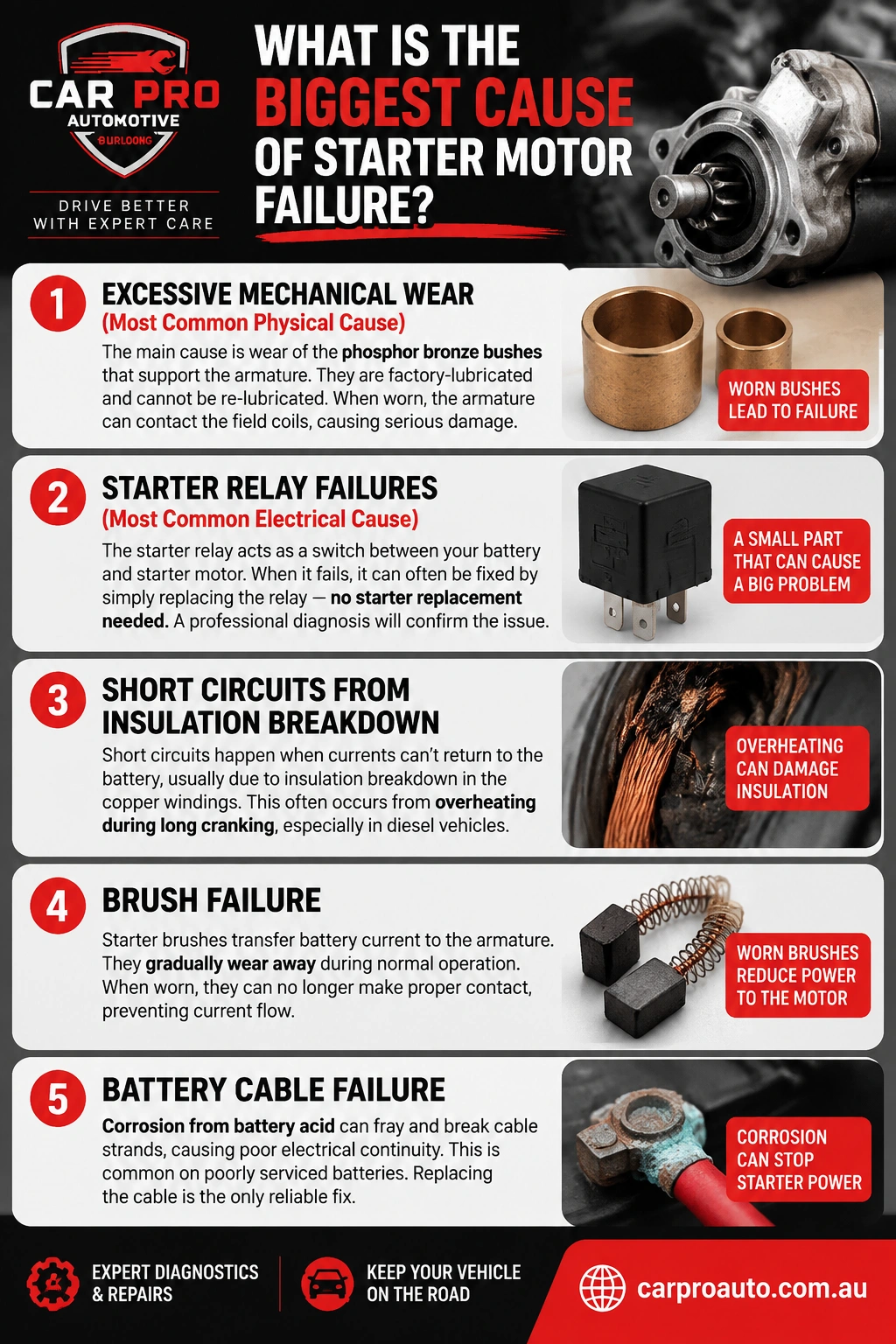
Excessive Mechanical Wear (Most Common Physical Cause)
The primary culprit behind physical starter motor failure is excessive mechanical wear of the phosphor bronze bushes that support the armature. These bushes are lubricated during manufacturing, but here’s the surprising part: they can’t be re-lubricated after installation. During engine cranking, wear occurs minimally because the motor rotates only as fast as the engine. The real mechanical stress happens when power is removed; the motor speeds up momentarily, causing significant wear on these bronze bushes.
When bushes wear excessively, the armature and field coils come into direct contact, causing catastrophic failure. This type of mechanical degradation is inevitable over time, though it develops gradually.
Starter Relay Failures (Most Common Electrical Cause)
Perhaps surprisingly, starter relay failures represent the most common electrical issue causing starter problems. The relay acts as an intermediary between your battery and the starter motor. When the relay fails, our car mechanic can typically resolve the problem by simply replacing it; no starter motor replacement necessary. However, identifying relay failure versus actual starter motor failure requires professional diagnosis, and we can certainly provide that.
Short Circuits From Insulation Breakdown
Short circuits occur when electrical currents cannot return to the battery through proper ground points. The most frequent cause is insulation breakdown around copper wire windings. This typically happens when the starter overheats during extended engine cranking. Diesel vehicles experience this problem frequently. Other causes include excessive battery power from jump-starting with oversized batteries, or when the starter doesn’t disengage from the flywheel after engine startup.
Brush Failure
Starter brushes are small, spring-loaded components transferring battery current to the armature. As your motor operates, brushes contact armature segments sequentially, supplying continuous power. However, the soft metal alloy these brushes are made from gradually wears away. Eventually, brushes can’t contact the armature effectively, preventing battery current from passing through. While this represents normal motor operation wear, it necessitates professional attention when brushes wear excessively.
Battery Cable Failure
Battery cable problems are common on poorly serviced vehicle batteries. Acid accumulations can fray battery cable strands, breaking them over time and creating electrical continuity loss. When your car mechanic inspects your vehicle, they check for this corrosion, as it directly impacts starter functionality. Cable replacement is the only reliable solution for this problem.
Is Your Starter Failing? Key Warning Signs
When your starter motor is failing, you’ll notice distinctive symptoms. Your engine won’t crank; you’ll hear clicking sounds instead. Sometimes the starter spins but doesn’t engage the engine. Other times you’ll get complete silence. These symptoms indicate your vehicle needs professional diagnosis from a qualified mechanic who can accurately identify whether your starter, relay, battery cable, or another component requires replacement.
Prevention & Professional Service
Protecting your starter motor means maintaining your battery properly, avoiding extended cranking, and ensuring your electrical system functions optimally. For specialised vehicles like Land Rover models, you need expertise specific to those requirements. Experienced technicians, particularly those specialising in vehicles like Land Rover, understand the specific demands different starters face. Our Land Rover specialist can provide targeted maintenance, preventing premature failure.
Regular inspections by professionals catch developing problems before they become critical failures. Battery acid accumulation, corroded cables, and relay issues are all preventable through proper maintenance.
Car Pro Mobile Automotive Keeps You Moving
Your starter motor enables every journey your car makes. When this critical component fails, you need immediate, professional help from someone who understands exactly what’s wrong. Car Pro Mobile Automotive brings expert diagnostic capabilities, genuine components, and efficient service directly to your location. Whether you’re experiencing starter motor issues, need professional battery cable inspection, or require emergency starter motor replacement, our mobile mechanics deliver the expertise and convenience you deserve.
Don’t get stranded by starter motor problems. Reach out to us by giving us a call at 1300 055 111, or you can send us an email at info@carproauto.com.au for professional assessment and reliable starter motor replacement service when needed.
FAQs
1. Can a failing starter motor be temporarily fixed or repaired?
Unfortunately, once starter motors fail, temporary fixes don’t work. Internal damage requires professional replacement for reliable vehicle operation and safety.
2. Why do some vehicles have more starter failures than others?
Usage patterns, maintenance quality, battery condition, and climate affect failure rates. Harsh conditions and poor maintenance accelerate starter failure significantly.
3. Is a clicking sound always a sign of starter motor failure?
No. Clicking often indicates a weak battery, corroded cables, or a failed relay. Only professional diagnosis distinguishes starter failure from electrical issues.
4. How long should a typical starter motor last in a vehicle?
Quality starters typically last 80,000-150,000 kilometres, varying by vehicle type, driving habits, and climate. Diesel vehicles generally experience shorter lifespans.
5. Can I replace a starter motor myself without professional help?
Technically possible for experienced mechanics, but professional installation ensures proper diagnostics and warranty coverage, protecting your investment appropriately.
6. What’s the difference between starter relay failure and starter motor failure?
Relays control circuits; starters crank engines. Relay failures cost less and are easier to fix. Starters require complete motor replacement professionally.
7. Does cold weather affect how often starters fail?
Yes, significantly. Cold temperatures thicken oil and increase cranking load, stressing starters. Cold climates see more failures than warm regions.
8. Are aftermarket starter motors as reliable as original equipment?
Quality varies. Reputable manufacturers offer equivalent performance. Poor alternatives fail prematurely. Professional mechanics source reliable components, preventing future problems.
9. Can jump-starting my car damage the starter motor?
Yes. Excessive voltage from large batteries can damage insulation, causing short circuits. Proper jump-starting procedures minimise starter motor damage.
10. Will my car’s computer warn me about starter failure?
Modern vehicles show electrical warnings occasionally. Traditional starter failure produces no advance warning. Sudden failure happens frequently, making maintenance crucial.